

How to book connected itineraries for crew rotations?
Samantha Uribe Alonso · Published
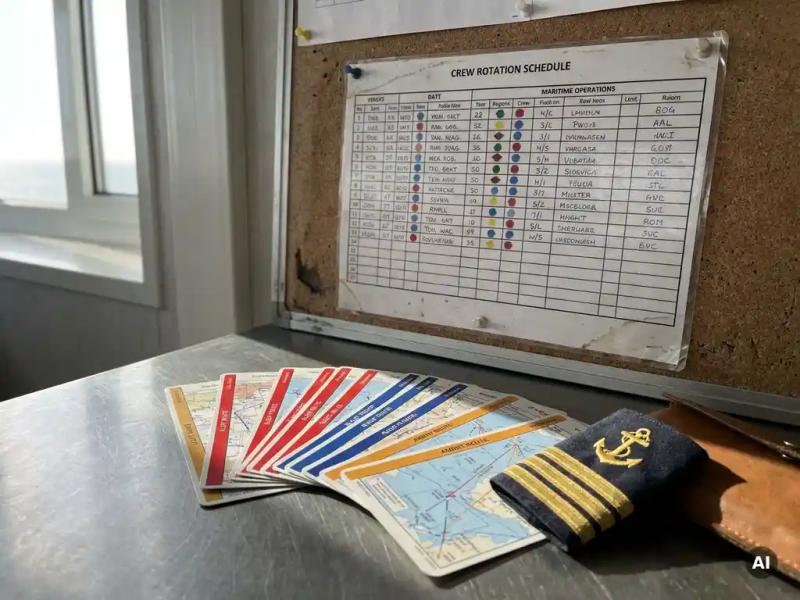
Booking connected itineraries for crew rotations is one of those tasks that sounds straightforward until you are actually doing it. Multiple legs, tight connections, different crew members travelling from different origins, and a rotation schedule that can shift at any moment: the margin for error is slim, and the consequences of getting it wrong can ripple across your entire operation. This guide walks you through the process step by step, from gathering what you need before you start to handling last-minute changes without losing control.
What you need before booking crew itineraries
Before you open any booking tool, having the right information to hand saves significant time and prevents costly mistakes. Crew travel booking for rotations is not like booking a single business trip: each itinerary is part of a larger operational puzzle, and missing one piece can disrupt the whole picture.
Gather the following before you begin:
- Crew roster and rotation schedule: confirm which crew members are travelling, their sign-on and sign-off dates, and the vessel or site location they need to reach
- Departure points for each crew member: crew often travel from different home airports, so you need origin details for each individual
- Destination port or reporting location: the exact arrival point, including any intermediate staging location if the final destination is not directly served by commercial flights
- Required arrival window: know the latest acceptable arrival time to ensure crew are on board before the vessel sails or the shift begins
- Travel policy parameters: check your company’s approved fare classes, maximum layover durations, and any preferred airlines or alliance restrictions
- Crew documentation status: confirm that passports, visas, and any required seafarer or crew certificates are valid for all transit countries on the route
With this information confirmed, you are ready to search with purpose rather than guess and revise. The clearer your inputs, the faster and more reliable your itinerary will be.
Search and select connecting flights for crew rotations
Searching for connected itineraries for crew rotations requires a different mindset than standard corporate travel. You are not just finding the cheapest or fastest route: you are finding the most operationally reliable one, with connection times that account for airport complexity and crew transfer requirements.
- Enter the origin and destination for each crew member, using the confirmed departure points from your roster
- Set the travel date based on the required arrival window, working backwards from the sign-on time to determine the latest acceptable departure
- Filter results to show only itineraries with connection times that meet your policy minimum: generally no less than 60 to 90 minutes for international connections, more for complex hubs
- Review the connecting airports on each route: avoid routing crew through airports known for delays or with limited onward options if a connection is missed
- Check that all legs of the itinerary are on the same booking reference where possible, as this provides stronger protection if the first leg is delayed and the airline must rebook the crew onto the next available flight
Once you have identified suitable options, cross-reference the arrival time against your required crew positioning window. A flight that lands two hours before sign-on with a straightforward transfer is far more reliable than one that appears faster on paper but involves a rushed connection through a busy hub. Prioritise reliability over speed when crew positioning is critical.
Book the full itinerary in one workflow
Booking each leg of a connected itinerary separately is one of the most common sources of problems in crew travel. When legs are on separate bookings, there is no automatic protection if one flight is delayed and the crew misses the next. Whenever possible, book the full itinerary as a single ticket or through a platform that holds all legs together under one record.
- Confirm the complete route: all legs, layover airports, and arrival times, before proceeding to passenger details
- Enter each crew member’s details exactly as they appear on their travel document, including middle names where required by the airline
- Add any relevant crew identifiers, cost codes, or vessel references required by your internal reporting process at the time of booking, not afterwards
- Review the fare conditions for each leg, particularly the rules around changes and cancellations, before confirming
- Confirm the booking and immediately verify that the full itinerary, all legs and all passengers, appears correctly on the confirmation
After booking, distribute the itinerary details to the relevant crew members and update your planning system to reflect the confirmed travel. Keeping your crew scheduling data and travel records aligned from the moment of booking prevents the information gaps that cause confusion when something changes later.
Adjust or rebook connections when rotations change
Rotation changes are not the exception in crew operations: they are a regular part of the job. A vessel arriving late, a crew member becoming unavailable, or a last-minute schedule revision can require you to rebook an entire connected itinerary at short notice. How quickly and cleanly you can make that change determines whether the disruption stays contained or escalates.
When a change is needed, work through it in this order:
- Identify which legs of the itinerary are affected by the rotation change: sometimes only the final leg needs adjusting, and the earlier connections can remain in place
- Check the cancellation and change conditions on the existing booking before taking any action: understanding what is recoverable helps you make the right call quickly
- Search for alternative connections that meet the new arrival requirement, applying the same reliability criteria used in the original search
- Cancel or modify the affected legs within any applicable free cancellation window to minimise cost exposure
- Rebook the revised itinerary and update your planning system immediately so that all stakeholders, crew, operations, and finance, are working from the same information
Speed matters here, but accuracy matters more. A hasty rebook that puts the wrong crew member on the wrong flight, or that creates a connection too tight to be viable, creates a second problem on top of the first. Take the time to verify the revised itinerary end to end before confirming, and communicate the updated details to crew as soon as the new booking is confirmed.
How we help with booking connected crew itineraries
Managing connected itineraries across multiple crew members, rotating schedules, and changing operational requirements is exactly the kind of complexity we built C Teleport to handle. Rather than piecing together bookings across multiple tools and chasing confirmations by email, our platform brings the entire crew travel booking process into a single, structured workflow.
Here is what that looks like in practice:
- Multi-leg itineraries in one place: search and book connected flights across 400+ airlines for multiple crew members simultaneously, without switching between tools or tabs
- Free cancellation on non-refundable fares: cancel flights at no charge within the free cancellation deadline, even on non-refundable tickets, giving you flexibility when rotations shift unexpectedly
- Instant rebooking in the app: when a rotation changes, rebook directly within the platform in a couple of clicks, rather than calling a travel agent or waiting for a response
- Automated travel policies: fare class rules, connection time requirements, and approval thresholds are built into the booking flow, so every itinerary is compliant from the start
- Real-time visibility across all bookings: see the status of every crew member’s travel in one place, keeping your planning data and operational reality aligned
- Specialist support for complex operations: our marine travel solutions are designed specifically for the routing and scheduling demands that crew-based industries face
If your team is spending too much time managing flexible crew travel across disconnected systems, we can help you bring it together. Explore our help centre to see how the platform works in detail, or book a demo to see it in action for your specific operation.
Frequently Asked Questions
What is the minimum connection time I should allow when booking crew rotations through busy international hubs?
For most international hubs, a minimum of 90 minutes is a safe baseline, but complex airports like Dubai (DXB), Amsterdam (AMS), or Frankfurt (FRA) often warrant 2 hours or more, especially if crew are travelling with checked luggage or need to clear immigration. Always factor in the specific terminal layout, whether a transit visa is required, and the time of day — peak-hour connections at busy hubs carry a higher risk of delay. When crew positioning is critical, it is better to build in more buffer than to chase a tighter itinerary that looks efficient on paper.
What happens if one leg of a crew itinerary is delayed and the crew member misses their connection?
If all legs are booked under a single ticket or booking reference, the operating airline is responsible for rebooking the crew member onto the next available flight at no additional cost. This is one of the strongest reasons to avoid booking legs separately — split bookings offer no such protection, and you may end up paying for a new ticket at short notice. If a missed connection does occur, contact the airline or your travel platform immediately, and simultaneously check alternative routing options so you can advocate for the fastest viable solution.
How should I handle crew members who are travelling from different home airports to reach the same vessel?
Treat each crew member’s itinerary as an individual booking, but manage them together within a single workflow or platform so you can track all departures and arrivals against the same sign-on deadline. The key is to work backwards from the required arrival window for each origin separately, rather than applying a one-size-fits-all departure time. Where possible, aim for crew to arrive at a common staging point with enough buffer that a delay on one itinerary does not hold up the entire crew transfer.
What are the most common mistakes to avoid when booking connected crew itineraries?
The most frequent mistakes are booking legs on separate tickets to save money, underestimating connection times at unfamiliar airports, and entering passenger details that do not exactly match travel documents. A second common error is failing to check visa and transit requirements for every country on the route, not just the final destination — a crew member without the correct transit authorisation can be denied boarding at the first leg. Building a pre-booking checklist that covers documentation, connection minimums, and fare conditions will catch most of these issues before they become operational problems.
How far in advance should crew rotation travel be booked to get the best combination of price and flexibility?
For predictable rotations, booking four to six weeks in advance typically offers a good balance between fare availability and operational flexibility. Booking too far out can lock you into itineraries before the rotation schedule is finalised, leading to costly changes, while last-minute bookings significantly limit your routing options and drive up costs. If your rotations are subject to frequent changes, prioritise fares with favourable change and cancellation conditions over the lowest base price — the savings on flexibility will usually outweigh the initial fare difference.
Do crew members need any specific documentation beyond a standard passport when travelling internationally for a rotation?
Yes — depending on the industry and route, crew members may need a Seafarer’s Identity Document (SID), a Continuous Discharge Certificate (CDC), flag state certificates, or specific visas for the vessel’s trading area. Transit countries along the route may also require their own documentation, even if the crew member is only transiting the airport. Always verify documentation requirements for every country on the itinerary well in advance, and keep digital copies of all crew credentials accessible so issues can be resolved quickly if questions arise at check-in or immigration.
How can I stay on top of last-minute rotation changes without rebooking itineraries from scratch each time?
The most effective approach is to use a travel platform that gives you real-time visibility into all active bookings and allows you to modify or rebook individual legs without having to cancel and restart the entire itinerary. Keeping your crew scheduling system and travel records in sync from the moment of booking also means you spend less time reconciling information when a change comes in. Where possible, build a short list of pre-vetted alternative routes for your most common corridors so that when a change is needed, you are selecting from known reliable options rather than searching from scratch under time pressure.