

How to coordinate on-signers and off-signers efficiently?
Samantha Uribe Alonso · Published
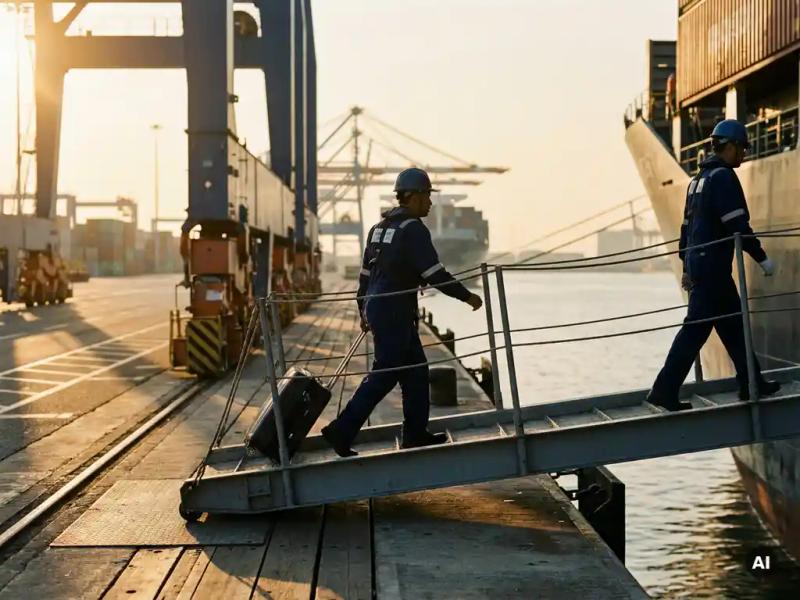
Coordinating on-signers and off-signers is one of the most operationally demanding tasks in crew management. Whether you work in maritime, aviation, or energy, a poorly timed crew change can leave a vessel short-handed, ground an operation, or strand a crew member at the wrong port. The margin for error is narrow, and the consequences of getting it wrong ripple quickly through the entire schedule.
This guide walks you through a practical, step-by-step approach to managing on-signer and off-signer coordination more effectively. Follow these steps to reduce disruption, improve handover quality, and keep your crew positioning on track.
Map your crew change timeline and handover points
Start by establishing a clear timeline for every crew change. Effective on-signer and off-signer coordination begins long before the actual handover date. Working backwards from the operational deadline, identify every milestone that needs to happen and who is responsible for each one.
- Define the on-board date for the incoming crew member and the off-board date for the outgoing one, and treat these as fixed anchors.
- Identify all handover points along the route, including transit ports, layover locations, and any intermediate stops where documentation or equipment needs to change hands.
- Assign a buffer window at each handover point to absorb delays, particularly for international connections where immigration processing can add unexpected time.
- Document the timeline in a shared format that both the planning team and travel coordinators can access and update in real time.
Once your timeline is mapped, you should have a clear picture of which crew members are moving at any given moment, where the critical handover points are, and how much flexibility exists at each stage. If the timeline reveals overlapping crew changes with no buffer, that is a signal to either adjust travel windows or flag the risk early with operations leadership.
Align travel bookings with operational schedules
Travel bookings that do not reflect the actual operational schedule are one of the most common causes of crew positioning failures. A flight booked a day too late, or routed through an airport with a tight connection, can turn a manageable crew change into a crisis. The goal here is to make sure every booking is built around operational reality, not just availability.
- Pull the confirmed operational schedule before making any bookings, and cross-reference the crew change dates against vessel ETAs, port schedules, or flight rosters.
- Identify the preferred arrival window for each on-signer, factoring in the time needed to clear port formalities or complete a pre-joining briefing.
- Book travel that arrives ahead of the operational need, not exactly at it. Build in enough lead time to account for standard delays.
- Check that off-signer departures do not conflict with handover completion. An off-signer who leaves before the handover is finished creates gaps in knowledge transfer.
After aligning bookings with the schedule, verify that every crew member’s itinerary has been reviewed against the operational plan, not just the calendar. A booking that looks fine in isolation may conflict with a port restriction or a vessel schedule change that came through after the initial plan was set.
Coordinate documentation and compliance in advance
Documentation failures are a leading cause of crew change delays. Visas, medical certificates, flag state endorsements, and port clearances all have their own lead times and requirements. Leaving these until the week of the crew change is a risk that experienced crew operations managers learn to eliminate early.
- Build a documentation checklist for each crew member that includes all required certificates, visas, and endorsements relevant to the destination port and flag state.
- Set internal deadlines for document submission that are at least two weeks ahead of the crew change date, giving enough time to chase missing items without jeopardising the operation.
- Verify visa requirements specific to the transit countries, not just the final destination. A crew member transiting through a third country may need a separate visa that is easy to overlook.
- Confirm that all documents are valid for the full duration of the sign-on period, not just the joining date.
With documentation confirmed, you can proceed to travel bookings with confidence that the crew member will not be turned away at a border or held at a port. Flag any outstanding items immediately to the relevant crew member and their agent so there is maximum time to resolve them.
Manage last-minute changes without disrupting operations
Even the most carefully planned crew change will occasionally face a last-minute disruption. A crew member falls ill, a vessel diverts to a different port, or a flight is cancelled. The difference between a disruption that is absorbed smoothly and one that escalates into an operational incident often comes down to how prepared your response process is before the change happens.
- Identify backup crew members in advance for high-risk or hard-to-replace roles, and confirm their availability status before the crew change window opens.
- Keep a list of alternative routing options for key ports, so that if a primary travel route becomes unavailable, you are not starting the search from scratch under pressure.
- Establish a clear escalation path: who is contacted first when a change is needed, who has authority to approve rebooking, and what the maximum acceptable response time is.
- Communicate changes to all affected parties simultaneously, including the vessel, the port agent, the incoming crew member, and the outgoing crew member.
After managing a last-minute change, take a moment to note what triggered it and whether it was predictable. Many disruptions that feel sudden have early warning signs that better monitoring would have caught. Building that feedback loop into your crew change management process reduces the frequency of genuine surprises over time.
Keep planning systems and travel data in sync
One of the most persistent frustrations in crew scheduling is the gap between what the planning system shows and what is actually happening on the ground. When travel bookings change and the planning system is not updated, crew schedulers make decisions based on outdated information. That misalignment compounds quickly and leads to errors that are difficult to unpick.
- Establish a single source of truth for crew positioning data, whether that is your crew management system, an ERP, or a dedicated planning tool, and make sure all updates flow into it promptly.
- Define who is responsible for updating the planning system when a travel change occurs, and set a maximum time window for that update to happen.
- Run a daily sync check during active crew change periods to compare confirmed travel itineraries against what the planning system reflects.
- Flag discrepancies immediately rather than assuming they will resolve themselves. A crew member shown as on board who has not yet departed is a planning risk, not just a data entry issue.
When your planning systems and travel data are genuinely aligned, crew schedulers can make faster, more confident decisions. They can see exactly where each crew member is in their journey, identify potential conflicts before they become problems, and communicate accurate information to the vessel and port agent without having to chase confirmations.
How C Teleport helps with crew change coordination
Managing on-signers and off-signers efficiently requires speed, accuracy, and the ability to respond to change without losing control of the wider operation. That is exactly the challenge we built C Teleport to solve. Our platform brings crew travel management and operational planning together in one place, so your team spends less time chasing information and more time making good decisions.
- Real-time booking and rebooking: When a crew change plan shifts, we make it easy to cancel and rebook flights instantly, even non-refundable ones, within the free cancellation window. No lengthy back-and-forth with agents, no delays.
- Centralised visibility: All bookings, itineraries, and changes are visible in one platform, keeping your planning team and travel coordinators working from the same data.
- Automated travel policies: Set rules that reflect your operational requirements, so every booking made through the platform is automatically compliant with your standards.
- System integrations: We connect with HR, finance, ERP, and BI systems in under a day, so travel data flows directly into your planning environment without manual re-entry.
- Specialist support for crew operations: Our marine travel solutions are designed specifically for the complexity of crew-based operations, with access to over 400 airlines and 2.5 million hotels worldwide.
If your current process involves too many manual steps, too many systems, or too many moments where critical information falls through the gaps, our flexible travel management tools are built to close those gaps. You can also explore our support resources to see how other crew operations teams are using the platform day to day.
Ready to see how it works in practice? Book a demo and we will show you exactly how C Teleport fits into your crew change workflow.
Frequently Asked Questions
How far in advance should we start coordinating a crew change?
Ideally, crew change coordination should begin at least four to six weeks before the planned handover date. This gives you enough lead time to confirm documentation, secure compliant travel bookings, and identify backup crew members before the window becomes too tight to course-correct. For high-complexity rotations involving multiple transit countries or hard-to-replace roles, starting even earlier is advisable.
What's the best way to handle a crew change when the vessel's ETA keeps shifting?
Build your travel bookings around a conservative ETA estimate rather than the optimistic one, and choose flexible or refundable fare types wherever operationally possible. Set a trigger point — for example, a 24-hour ETA shift — that automatically initiates a review of all affected bookings and notifications to relevant parties. Having a pre-agreed rebooking protocol means your team isn’t making judgment calls under pressure when the schedule moves.
How do we prevent knowledge gaps when an off-signer leaves before the handover is fully complete?
The most effective safeguard is treating handover completion as a hard departure condition, not a courtesy. Build a structured handover checklist that the off-signer must complete and the on-signer must sign off on before departure is confirmed. For critical roles, consider scheduling a one-to-two day overlap period so the incoming crew member can shadow the outgoing one before full responsibility transfers.
What are the most commonly overlooked documentation requirements in crew changes?
Transit visas are the single most frequently missed item — crew members and coordinators often focus on the destination country and overlook visa requirements for layover countries, even for short transits. Beyond that, watch for certificates that are valid on the joining date but expire mid-rotation, and flag state endorsements that may not automatically cover a vessel’s current trading area. Building a per-crew-member checklist that accounts for the full sign-on period, not just the joining date, catches most of these gaps.
How should we structure our escalation process when a last-minute disruption occurs?
Define a tiered escalation structure before disruptions happen, not during them. The first tier should be your on-call travel coordinator, who handles rebooking and alternative routing. The second tier is the crew operations manager, who has authority to approve cost overrides or activate backup crew. The third tier is operations leadership, who are notified when the disruption poses a risk to the vessel’s operational status. Documenting this clearly and making it accessible to all team members eliminates the confusion that turns a manageable problem into a crisis.
Can crew change coordination processes be standardised across different vessel types or operational regions?
A core framework can and should be standardised — timelines, documentation checklists, escalation paths, and system update protocols all benefit from consistency. However, regional variations such as local visa requirements, port formality timelines, and preferred routing options should be maintained as configurable overlays within that framework. Trying to apply a fully uniform process across, say, North Sea operations and Southeast Asian port rotations without regional adaptation is a common source of compliance gaps.
How do we measure whether our crew change coordination process is actually improving over time?
Track a small set of leading and lagging indicators: the percentage of crew changes completed without last-minute disruption, average lead time between booking and travel date, documentation exception rate, and time-to-resolution when a disruption does occur. Review these monthly and tie any spikes back to specific crew changes to identify whether the cause was systemic or isolated. Over time, this feedback loop surfaces patterns — such as a particular port or route that consistently causes delays — that targeted process changes can address.