

How to rebook crew after a missed connection?
Samantha Uribe Alonso · Published
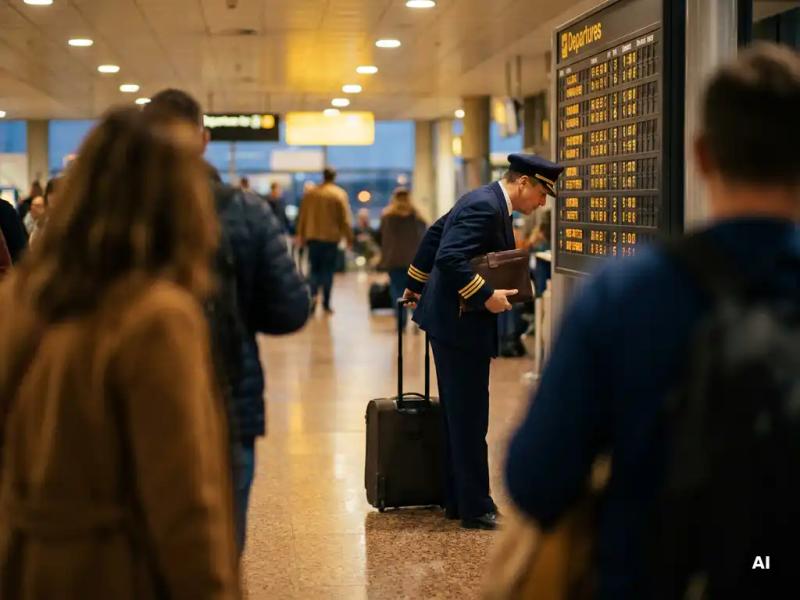
A missed connection is one of the most disruptive events in crew operations. One delayed inbound flight can trigger a cascade of problems: a crew member stranded at a transit airport, a vessel or aircraft left without the required personnel, and a planning team scrambling to find a solution under pressure. Knowing exactly how to rebook crew after a missed connection, quickly, calmly, and without losing visibility, is a skill every operations and crew planning team needs to have sharp. This guide walks you through the full process, from the moment you confirm a missed connection to the steps that help prevent the same situation from happening again.
Assess the situation before rebooking
Before you touch a booking, gather the facts. Acting on incomplete information leads to costly mistakes, a rerouting that arrives too late, or a rebooking to the wrong port. Take two minutes to establish a clear picture of what has happened and what the operational deadline actually is.
- Confirm the crew member’s current location and the airport they are stranded at.
- Identify the missed onward flight, including the flight number, original departure time, and destination.
- Check what the operational deadline is: when does the crew member need to be on site to avoid a disruption?
- Determine whether the missed connection was caused by an airline delay or a check-in failure, as this affects who bears responsibility for rebooking costs.
- Contact the crew member directly to confirm their status, whether they have luggage checked through, and whether the airline has already offered any rebooking assistance.
Once you have this information confirmed, you are ready to act. Do not skip this step even when time feels short, clarity now prevents a second disruption later.
Find the fastest available rerouting options
Speed matters here, but so does accuracy. Your goal is to find the fastest route that gets the crew member to the right destination before the operational deadline, not simply the next available flight to that city.
- Search for all available flights from the crew member’s current airport to the destination, including indirect routes via alternative hubs.
- Check nearby airports if the primary airport has limited options, a short transfer to an alternative departure point may unlock significantly faster connections.
- Evaluate total journey time rather than just departure time. A flight leaving sooner but with a long layover may arrive later than a slightly later direct option.
- Consider whether the destination has multiple ports of entry and whether a closer airport could work operationally.
- If the original delay was caused by the airline, contact the airline’s disruption desk or use your travel management system to check what rebooking options they are obligated to provide at no additional cost.
Keep at least two viable options in front of you before you commit. Circumstances can change between the moment you identify a route and the moment you attempt to book it, having a backup saves you from starting over.
Rebook and reissue the ticket without delay
With your routing options identified, move immediately to rebooking. Every minute of delay narrows the window of available seats, particularly on popular routes or during peak travel periods. Crew rebooking needs to happen faster than standard leisure or business travel rebooking, the operational clock does not pause.
- Select the best available routing based on your assessment and confirm seat availability before proceeding.
- Cancel or modify the existing booking as required, check whether the original ticket allows changes and whether any cancellation deadlines apply.
- Issue the new ticket and confirm the booking reference with the crew member immediately so they can proceed to the correct gate or terminal.
- If the crew member has checked luggage, contact the airline to ensure bags are rerouted to match the new itinerary, this step is frequently overlooked and causes secondary delays on arrival.
- Send the crew member their updated itinerary in writing, including any new terminal or gate information at the transit airport.
Verify the booking is confirmed, not just on hold. A confirmed booking reference in the crew member’s hands is your checkpoint for this step. Do not move on until you have it.
Align planning systems with the updated itinerary
A successful rebooking is only half the job. If your crew planning or scheduling system still shows the original itinerary, you create a second layer of risk: other planners working from outdated information, incorrect arrival times feeding into shift handovers, or downstream bookings built on assumptions that are no longer valid.
- Update the crew member’s travel record in your scheduling or crew management system to reflect the new flight details, including revised arrival time.
- Notify any stakeholders who were planning around the original arrival, vessel agents, port coordinators, or on-site managers who need to adjust their timing.
- Check whether the revised arrival time affects any subsequent travel arrangements, such as a hotel check-in, a connecting transfer, or the next leg of a multi-sector journey.
- Log the disruption with a brief record of what happened, the cause, and the resolution taken, this information is valuable for future planning reviews.
Once your systems reflect the updated itinerary and all relevant parties have been notified, the immediate crisis is resolved. The final step is to use what happened to reduce the likelihood of it happening again.
Prevent missed connections from becoming repeat disruptions
A single missed connection is an operational incident. A pattern of missed connections is a planning problem. After the immediate situation is resolved, take time to review what contributed to the disruption and whether your standard approach to crew routing needs adjustment.
Review the connection time that was originally booked. Minimum connection times published by airlines are designed for leisure passengers moving through familiar terminals, crew members travelling with luggage, in unfamiliar airports, or during peak periods often need more buffer. If your team routinely books tight connections to save time or cost, that practice is worth revisiting.
Consider the airports and routes where missed connections occur most frequently. Some transit hubs are consistently more problematic due to terminal layouts, immigration queues, or high rates of inbound delays. Building awareness of these risk points into your routing preferences reduces exposure before a booking is ever made.
Finally, ensure your team has a clear, shared protocol for what to do when a missed connection is confirmed: who is responsible for rebooking, who notifies the crew member, who updates planning systems, and who communicates with the operation. A defined process executed quickly is always more effective than an improvised response under pressure.
How C Teleport helps with crew rebooking after missed connections
Managing a crew travel disruption manually, across multiple airline websites, planning tools, and communication channels, is exactly the kind of pressure that compounds an already stressful situation. We built C Teleport to remove that friction entirely, giving operations and crew planning teams the tools to respond to disruptions like missed connections in a matter of clicks rather than phone calls.
- Instant rebooking in the app: When a crew member misses a connection, you can cancel the original booking and rebook an alternative flight directly within the platform, without contacting an agent or waiting on hold. Changes happen in real time.
- Free cancellation on non-refundable tickets: Our flexible travel options allow you to cancel flights, including non-refundable ones, within the free cancellation window, so a disruption does not automatically mean a financial loss.
- Access to 400+ airlines in one place: Rather than searching across multiple booking channels to find the fastest rerouting, everything is available in a single platform, making it faster to identify and secure the best available option.
- Real-time visibility across all bookings: Your entire team works from the same live data, so planning systems and travel records stay aligned without manual updates being passed between departments.
- Built for crew-based operations: Whether your teams operate in aviation, energy, or marine environments, C Teleport is designed for the specific demands of crew positioning, not adapted from a general business travel tool.
- Reporting that supports better planning: Every disruption, rebooking, and cost is captured in built-in analytics, giving you the data to identify patterns and reduce repeat incidents over time.
If your team is regularly managing crew travel disruptions with manual processes, there is a better way. Book a demo to see how C Teleport handles crew rebooking in practice, or visit our help centre if you have questions about how the platform works.
Frequently Asked Questions
How much connection time should we build into crew travel itineraries to avoid missed connections?
As a general rule, crew travel itineraries should include a minimum of 90 minutes for domestic connections and at least 2–3 hours for international connections, particularly at large or high-traffic transit hubs. This buffer accounts for luggage, immigration, unfamiliar terminals, and the higher-than-average rate of inbound delays on busy routes. If your team has experienced repeated missed connections at a specific airport, consider increasing that buffer further or routing through an alternative hub altogether.
Who is responsible for covering rebooking costs when a crew member misses a connection due to an airline delay?
When a missed connection is caused by an airline-controlled delay, such as a late inbound aircraft or a mechanical issue, the operating carrier is generally obligated to rebook the affected passenger on the next available flight at no additional cost, and in some regions may also owe compensation or duty-of-care provisions such as meals and accommodation. However, if the missed connection resulted from a check-in failure, a crew member arriving late to the gate, or a booking error, the cost typically falls to the employer or travel manager. Always confirm the cause of the delay before rebooking to determine who should bear the financial responsibility.
What should we do if no suitable flights are available from the stranded crew member's current airport?
If the originating airport has limited onward options, your first step should be to check nearby alternative airports, even a short taxi or rail transfer can open up significantly more routing options. You should also consider whether the destination has multiple usable ports of entry, as flying into a secondary airport closer to the vessel or site may be faster overall than waiting for a direct flight to the primary destination. If no viable option exists within the operational window, escalate immediately to assess whether a standby crew member needs to be mobilised in parallel while the stranded crew member continues to travel.
How do we handle a missed connection when the crew member is in a country where they don't speak the local language?
This is where having a centralised travel management platform or a dedicated operations contact becomes critical — the crew member should not be left to navigate rebooking independently at a foreign airport. Ensure your team has a clearly communicated emergency contact number that crew members can reach at any hour, and that the operations contact takes full ownership of the rebooking process remotely, sending the crew member step-by-step instructions in writing. It is also worth confirming with the crew member which terminal or desk to go to, rather than assuming they can interpret local airport signage or communicate with airline staff effectively.
What information should be included in the disruption log after a missed connection is resolved?
A useful disruption log should capture the crew member’s name and route, the original and revised itineraries, the confirmed cause of the missed connection, the time elapsed between the disruption being identified and the rebooking being confirmed, any additional costs incurred, and a brief note on whether the situation could have been prevented. This level of detail transforms individual incidents into actionable data, allowing planning teams to identify recurring problem routes, airports, or booking practices and make targeted improvements. Even a simple shared document or field within your crew management system is sufficient, as long as it is completed consistently after every disruption.
Is it worth contacting the airline directly during a missed connection, or should we always handle rebooking ourselves?
It depends on the cause of the disruption and the tools available to your team. If the airline is at fault, contacting their disruption or customer service desk can result in a free rebooking, and in some cases priority placement on the next available flight, so it is always worth pursuing in parallel with your own search. However, relying solely on the airline introduces delays, particularly during high-disruption periods when their queues are long and options are limited. The most effective approach is to run both tracks simultaneously: have the crew member engage with airline staff at the airport while your operations team identifies and prepares to book the best available alternative independently.
How can we build a team-wide protocol for missed connections if we don't currently have one in place?
Start by mapping out the four core responsibilities that need to be assigned: who contacts the crew member, who owns the rebooking, who updates planning systems, and who communicates with the operation or vessel. Document these as a simple step-by-step checklist that can be followed under pressure, and make sure every member of the planning team knows where to find it. Run through the protocol as a tabletop exercise using a realistic scenario before a real disruption occurs, this surfaces gaps and builds team confidence so that when a missed connection does happen, the response is coordinated rather than improvised.