

How to improve the accuracy of crew bookings?
Samantha Uribe Alonso · Published
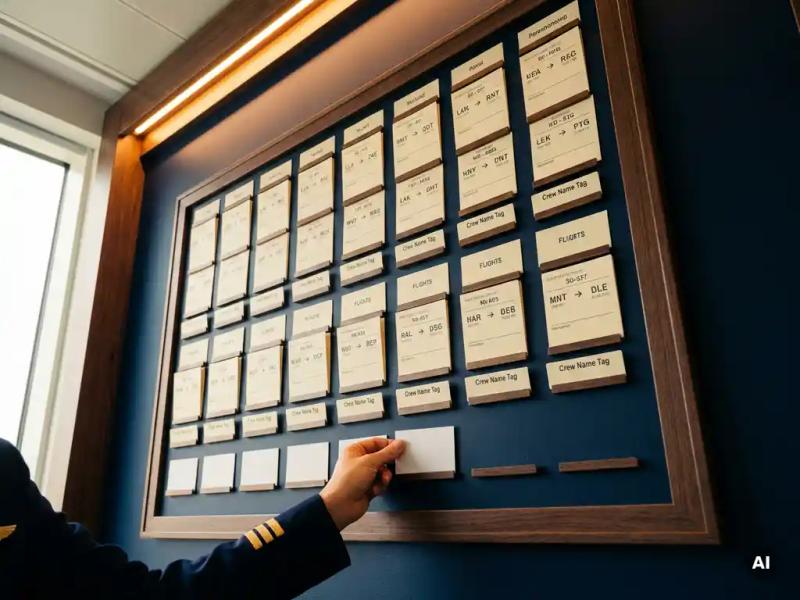
Inaccurate crew travel bookings create a ripple effect that can disrupt an entire operation. When booking details do not match roster data, crew members miss connections, arrive at the wrong port, or are simply unavailable when the operation needs them most. For crew schedulers and operations managers, the cost of these errors is not just financial; it is measured in delays, last-minute scrambles, and pressure on the whole team.
This guide walks you through five practical steps to improve crew booking accuracy, reduce mismatches between travel and planning data, and build a more reliable crew positioning process from the ground up.
Align crew travel data with your planning system
The most common source of booking errors is a disconnect between your crew scheduling system and the travel booking process. When planners work from one dataset and travel coordinators work from another, discrepancies are almost inevitable. Aligning these two sources of information is the foundation of accurate crew travel bookings.
- Identify where your crew roster data currently lives, whether that is a dedicated crew management system, an ERP, or a spreadsheet, and map out how that data reaches the person making travel bookings.
- Document every handoff point where information is transferred manually, as these are your highest-risk moments for error.
- Establish a single source of truth for crew assignments that both planners and travel coordinators reference before any booking is made.
- Where possible, connect your planning system directly to your travel booking platform so that crew details populate automatically rather than being re-entered by hand.
Once this alignment is in place, you should see an immediate reduction in bookings made for the wrong crew member, wrong date, or wrong destination. Verify the connection is working by cross-checking three to five recent bookings against the roster data that was live at the time of booking.
Set clear travel policies before booking crew
Crew scheduling operates under constraints that standard corporate travel does not always account for: tight connection times, specific port requirements, and the need to prioritise operational reliability over cost savings. Without clear travel policies in place, individual bookers make judgement calls that may not reflect operational priorities, and booking accuracy suffers as a result.
- Define the connection time minimums required for crew to reliably make their sign-on, factoring in typical port transfer times and any specific requirements for the routes you operate.
- Specify which fare types are acceptable, for example, whether fully flexible fares are required for certain routes where last-minute changes are common.
- Set rules around preferred airlines or routing logic where operational reliability is more important than the cheapest available option.
- Document these policies in a format that can be shared with everyone involved in making or approving crew travel bookings.
Travel policies work best when they are embedded into the booking process itself rather than stored in a document that people may or may not consult. When policies are automated within your booking platform, bookers are guided toward compliant choices by default, which removes a significant source of human error from the equation.
Build a consistent crew booking workflow
Inconsistency in how bookings are made is one of the quieter contributors to inaccuracy. When different team members follow different steps, use different tools, or apply different logic to the same type of booking, errors accumulate over time. A standardised workflow gives everyone a clear process to follow and makes it far easier to identify where things go wrong when they do.
- Map out the full booking process from the moment a crew assignment is confirmed to the point where travel documents are issued and confirmed with the crew member.
- Identify which steps require human decision-making and which can be handled through automation or template-based booking.
- Create a checklist or standard operating procedure that every booking must follow, covering key details such as name spelling, travel document numbers, and sign-on location.
- Assign clear ownership for each stage of the process so that accountability is built into the workflow rather than assumed.
A consistent workflow also makes onboarding new team members significantly easier. When the process is documented and repeatable, new crew coordinators can get up to speed quickly without relying on informal knowledge passed between colleagues. Review the workflow quarterly to identify any steps that have become outdated or that are regularly skipped in practice.
Handle last-minute changes without losing accuracy
Last-minute changes are a constant reality in crew-based operations. A crew member falls ill, a vessel schedule shifts, or a flight cancellation forces a reroute. The pressure to move quickly in these moments is exactly when booking errors are most likely to occur. Building a clear process for handling changes keeps accuracy intact even when time is short.
- Establish a dedicated process for change requests that is separate from the standard booking workflow, one that prioritises speed without bypassing the checks that prevent errors.
- Ensure that whoever handles last-minute changes has immediate access to the current roster data, not a version that may be hours out of date.
- Confirm cancellation and rebooking options before making any change, so that the team is not left with duplicate bookings or orphaned reservations.
- Log every change made, including who authorised it, what was changed, and when, so that the booking record stays accurate and auditable.
Speed and accuracy are not mutually exclusive in a change scenario, but they do require the right tools. Platforms that allow instant rebooking and cancellation within the same interface significantly reduce the risk of errors introduced during manual workarounds. After any last-minute change, verify that the updated booking details have been communicated to the crew member directly and that the planning system reflects the new travel arrangement.
Validate bookings against roster data before departure
Even with strong processes in place, a final validation step before departure is one of the most effective ways to catch errors before they become operational problems. This is not about distrust in the booking process; it is a standard quality control measure that protects the operation from the consequences of any error that slipped through.
- Set a validation window, typically 24 to 48 hours before departure, during which all upcoming crew bookings are reviewed against the current roster.
- Check that the traveller name on the booking matches the crew member’s travel document exactly, as name discrepancies can cause boarding issues.
- Confirm that the routing and arrival time allow sufficient time for the crew member to reach their sign-on location before the required report time.
- Verify that any changes made after the original booking have been correctly reflected across all legs of the journey and in the planning system.
Build this validation step into your standard pre-departure checklist so that it happens consistently rather than only when someone remembers to do it. Flag any discrepancies immediately and resolve them through your change management process. Over time, tracking how many errors are caught at this stage gives you a useful indicator of where earlier steps in the process may need strengthening.
How we help you improve crew booking accuracy
At C Teleport, we built our platform specifically for the kind of complex, fast-moving operations where crew booking accuracy is not a nice-to-have; it is essential. We understand that for crew schedulers and operations managers, every booking needs to reflect what is actually happening on the ground, and that errors in travel data translate directly into operational disruption.
Here is how our platform supports each of the steps in this guide:
- System integration: We connect with HR, finance, and ERP systems in under a day, so your crew roster data and travel bookings stay aligned without manual re-entry.
- Automated travel policies: Travel rules are built directly into the booking flow, guiding every booker toward compliant, operationally appropriate choices by default.
- Consistent booking workflow: Everything, flights, hotels, and more, is managed in one place, giving your team a single, standardised environment for all crew travel bookings.
- Instant changes and cancellations: Our flexible travel options allow bookings to be cancelled and rebooked in a couple of clicks, even for non-refundable fares within the free cancellation deadline, so last-minute changes do not compromise accuracy.
- Real-time visibility: Full visibility across all bookings, changes, and costs means your planning and travel data stay in sync, making pre-departure validation straightforward.
- Specialist support for crew operations: Whether you operate in aviation, energy, or marine travel, our platform and team are built around the specific demands of crew-based scheduling.
If you want to see how we can help your team reduce booking errors and keep crew positioning on track, book a demo and we will walk you through the platform in the context of your operation. You can also explore answers to common questions in our help centre.
Frequently Asked Questions
How do I know if our current crew booking process is causing operational disruptions?
Start by auditing your last 30 to 60 days of crew travel bookings and cross-referencing them against your roster data at the time of booking. Look for patterns such as repeated name mismatches, last-minute rebookings on the same routes, or crew members flagging travel issues before departure. If manual handoffs exist between your scheduling system and your travel booking tool, that is almost always where errors are entering the process.
What is the fastest way to get started if we are still managing crew bookings through spreadsheets?
The highest-impact first step is to consolidate your crew roster data into a single, shared source of truth that everyone involved in travel booking can access in real time. Even before investing in a dedicated platform, eliminating parallel spreadsheets and version-controlled documents removes a major source of discrepancy. Once you have that foundation, you can evaluate booking tools that integrate directly with your roster data to automate the most error-prone handoff points.
How should we handle situations where a crew member's travel documents change after a booking has already been made?
This is one of the most common causes of boarding issues and should be covered explicitly in your booking workflow. Establish a clear protocol that requires any change to a crew member’s travel document details to trigger an immediate review of all upcoming bookings associated with that individual. Where possible, use a platform that stores crew document data centrally so that updates are reflected across all active bookings rather than requiring manual corrections on a case-by-case basis.
What are the most common mistakes teams make when trying to improve crew booking accuracy?
The most frequent mistake is focusing on fixing individual errors rather than addressing the process gaps that allow errors to occur in the first place. Teams often implement checklists or add approval steps without first identifying where in the workflow discrepancies are actually being introduced. Another common pitfall is treating travel policy as a reference document rather than embedding it directly into the booking process, which means compliance depends on individual bookers remembering to consult it.
How do we maintain booking accuracy when multiple people across different teams or locations are making crew travel bookings?
Consistency across distributed teams requires two things: a standardised workflow that every booker follows regardless of location, and a shared platform that enforces the same rules and accesses the same roster data for everyone. Without a centralised booking environment, different teams inevitably develop their own habits and workarounds, which makes errors harder to trace and correct. Clear ownership at each stage of the booking process, combined with a single audit trail, is essential when multiple people are involved.
How often should we review and update our crew travel policies?
At a minimum, travel policies should be reviewed whenever there is a significant change in your operational routes, vessel schedules, or the airlines and ports you regularly use. Beyond that, a quarterly review of booking data is a practical way to identify whether current policies are still fit for purpose or whether bookers are routinely working around them, which is usually a sign that a policy needs updating rather than enforcing more strictly. Tracking the types of errors caught during pre-departure validation is one of the clearest signals that a specific policy gap needs addressing.
Can automated booking tools fully replace human oversight in crew travel management?
Automation significantly reduces the risk of errors introduced through manual data entry and inconsistent decision-making, but human oversight remains essential, particularly for last-minute changes, complex multi-leg itineraries, and situations where operational judgement is required. The most effective approach is to use automation to handle repeatable, rule-based tasks and to free up your team’s attention for the higher-stakes decisions that genuinely benefit from experience and contextual knowledge. The pre-departure validation step, for example, is most reliable when it is both systematically scheduled and actively reviewed by a person who understands the operational context.